Move grooming, daycare, boarding, and add-on requests into one structured flow so the front desk handles fewer calls and fewer missed details each day.
Cleaner Booking
Match dogs, groomers, daycare groups, rooms, and time blocks to real capacity so the schedule stays safer and less dependent on guesswork each day.
Capacity Control
Keep vaccines, waivers, grooming notes, feeding instructions, meds, behavior notes, and owner preferences tied to each pet before care begins safely.
Pet Records Ready
Use reminders, deposits, cancellation rules, and waitlist follow-up so open slots are easier to protect and recover when bookings change quickly.
No-Show Control


Systems Customized to Meet Your Needs
Our systems are developed around the way pets, families, staff, schedules, records, and rebooking actually interact:
Marketing & Visibility - Clarify grooming, daycare, packages, service fit, trust signals, reviews, booking paths, and calls to action.
Lead Capture & Intake - Collect owner details, pet profiles, service needs, vaccine status, behavior notes, photos, and care instructions.
Quote & Approval Flow - Manage service pricing, add-ons, deposits, waivers, consent forms, cancellation rules, invoices, and payments.
Scheduling & Capacity - Organize grooming slots, daycare capacity, staff assignments, rooms, play groups, recurring visits, and waitlists.
Care Workflow - Give staff checklists for check-in, grooming, feeding, medication, group play, incident notes, and checkout.
Customer Communication - Send confirmations, reminders, vaccine requests, care updates, photos, invoices, and rebooking prompts.
Pet History & Retention - Track grooming preferences, vaccine dates, care notes, behavior flags, no-shows, packages, and repeat visits.
Reviews & Reporting - Trigger reviews, monitor reputation, track booking sources, utilization, no-shows, rebooking, and staff workload.
Top Ten Points of Failure for Pet Grooming / Daycare Systems
1. No-shows and late cancellations eating capacity
Groomers say no-shows block time that could have gone to waitlisted pets and turn the schedule into daily frustration. When deposits, reminders, cancellation rules, and waitlist follow-up are weak, lost appointments become lost revenue.
2. Front desk overload and too many routine calls
Owners say online booking, reminders, and self-service can reduce receptionist dependence. Without a structured booking and communication flow, staff spend too much time answering routine questions, chasing vaccines, confirming appointments, and repeating basic details.
3. Scheduling that does not fit multi-service care
Managers indicate that grooming, daycare, boarding, training, retail, add-ons, and mobile work can break generic calendars. A workable system has to reflect real capacity, staff skills, pet size, service duration, rooms, play groups, and recurring attendance.
4. Weak pet profiles, vaccine records, and consent documentation
Pet-care operators need vaccine dates, waivers, grooming notes, feeding instructions, medication details, behavior flags, and owner preferences in one record. If forms and PDFs are scattered, the business carries operational, legal, and trust risk.
5. Care instructions that are too generic
Managers say feeding, medication, kennel, and care reporting need more detail than broad morning/evening defaults. Pets often need individual instructions, and staff need a reliable way to see and complete them during the day.
6. SOPs trapped in owner memory
Owners preparing to delegate or sell recognize that scattered procedures limit consistency and value. Check-in, group play, grooming, cleaning, incident handling, checkout, and escalation steps need to be available to staff at the moment of work.
7. Burnout from overbooking and production pressure
Groomers describe packed books, difficult clients, physical strain, and mismanagement as major stressors. Systems that ignore staff load create more speed on paper while raising turnover risk, mistakes, and safety problems.
8. Incident logging and injury documentation gaps
Public investigations and customer complaints show that undocumented injuries, escapes, deaths, and care issues can become serious trust and regulatory problems. Incident records need to be easy to create, review, and communicate.
9. Unsafe capacity or weak supervision visibility
Managers indicate that staffing ratios, group sizes, room assignments, and supervision matter. If the business cannot see how many pets are in care, who is watching them, and which pets need separation, risk rises quickly.
10. Weak reporting on profit, rebooking, and service mix
Owners need to know which services, packages, staff schedules, no-show patterns, and rebooking flows actually support stable income. Without clean reporting, busy days can hide low-margin work and missed retention opportunities.
Here's How We Address These Issues

Structured Pet Intake
• Screens service type, pet size, temperament, vaccine status, grooming needs, and care fit before booking
• Captures owner details, pet profiles, photos, allergies, feeding notes, medication instructions, and behavior flags
• Routes grooming, daycare, boarding add-ons, new pets, repeat visits, and urgent requests differently
• Reduces incomplete records, unsafe bookings, unnecessary phone calls, and front desk rework
• Gives staff clearer information before the pet arrives

Booking & Capacity
• Centralizes grooming slots, daycare capacity, play groups, rooms, staff assignments, and waitlists
• Shows what is booked, pending, checked in, in care, ready for pickup, cancelled, or no-show
• Connects service duration, staff skill, pet size, vaccine readiness, and care needs
• Reduces overbooking, underused openings, group-size confusion, and schedule guesswork
• Gives owners and managers clearer visibility without constant desk interruptions

Care Workflow
• Gives staff simple steps for check-in, grooming, daycare, feeding, medication, rest, and checkout
• Supports quick status updates from arrival through pickup
• Standardizes notes, care updates, photos, incident logs, and handoff requirements
• Builds safety and documentation checkpoints into daily work instead of relying on memory
• Helps prevent missed instructions, inconsistent care, and unclear family communication

Record Protection
• Creates cleaner vaccine, consent, waiver, behavior, grooming, feeding, and medication records
• Tracks missing documents, expiring vaccines, care preferences, no-show history, and owner permissions
• Documents what the family provided and approved before care begins or changes
• Reduces disputes, rushed phone calls, unsafe intake, and scattered paperwork
• Protects trust while helping staff serve each pet consistently

Retention Engine
• Stores pet, family, service, preference, package, and visit history
• Triggers reminders for rebooking, vaccines, packages, daycare passes, and follow-up
• Supports review requests after successful visits
• Helps convert one-time appointments into recurring care relationships
• Improves the family experience through timely, useful communication

Growth Backbone
• Reduces owner and front-desk overload by clarifying booking, care, staff, and payment handoffs
• Supports staff onboarding, SOP access, and performance visibility
• Keeps tools practical for groomers, daycare attendants, managers, and owners
• Connects reviews, booking paths, local visibility, reminders, and referral signals
• Creates a system that can support more pets, safer capacity, and steadier repeat revenue

Booking & Capacity View
Grooming slots, daycare capacity, staff assignments, waitlist, no-show risks, pickup windows, and room limits shown in one usable view.

Pet Profile & Care Notes View
Pet profiles with vaccines, waivers, grooming preferences, feeding notes, medication instructions, behavior flags, photos, and incident logs.

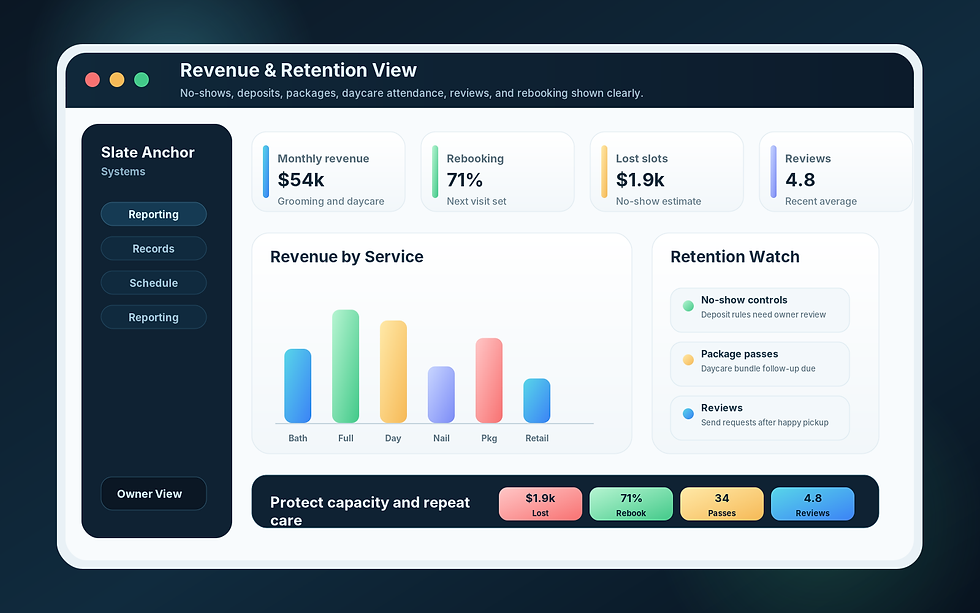
Revenue & Retention View
No-shows, deposits, packages, grooming revenue, daycare attendance, reviews, and rebooking shown clearly so owners can protect capacity.