

Capture VIN, tire size, wheel condition, locking-lug details, site access, urgency, and photos before a truck rolls with the wrong tire or tools.
Exact Tire Intake
Schedule by location, urgency, technician fit, tire availability, and site safety so each truck leaves with a clear daily plan, not a loose calendar.
Control the Route
Tie each job to tire availability, vendor orders, holds, substitutes, and prep notes so one bad size or missing part does not collapse the route.
Prevent Tire Gaps
Document fees, approvals, repair limits, warranty notes, deposits, and payment status so customers understand the work and margins stay protected.
Protect the Invoice


Systems Customized to Meet Your Needs
Our systems are developed around the way mobile tire work actually moves from request to route to closeout:
-
Marketing & Visibility — Clarify scheduled install, roadside, fleet, service-area, booking, and follow-up paths.
-
Lead Capture & Intake — Collect tire size, VIN, vehicle, location, urgency, photos, lug details, and job type.
-
Quote & Approval Flow — Manage service fees, tire quotes, deposits, repair approvals, warranties, and invoices.
-
Scheduling & Dispatch — Assign work by location, urgency, technician, tire availability, route, and safe worksite fit.
-
Field Execution — Give technicians tire-specific checklists, inspection steps, notes, photos, and closeout requirements.
-
Customer Communication — Send confirmations, live ETAs, service updates, invoices, payment links, and follow-up.
-
Service History & Retention — Track vehicles, tire fitment, completed services, declined work, intervals, and reminders.
-
Reviews & Reporting — Trigger reviews, monitor reputation, track response times, and surface inventory and margin issues.
Top Ten Points of Failure for Mobile Tire Service Systems
1. Weak tire intake and fitment confirmation
Mobile tire work depends on details gathered before dispatch: VIN, tire size, vehicle location, wheel condition, locking lug nuts, repairability, urgency, and site safety. When intake is thin, the truck can roll with the wrong tire, missing tools, or a job that should have been screened out earlier.
2. Unreliable dispatch, routing, and ETA control
Tire jobs are not just calendar slots. They have to be routed by geography, urgency, technician skill, tire availability, road conditions, and safe worksite access. Without that control, ETAs drift, trucks idle, customers keep texting, and the rest of the day starts to slip.
3. Wrong or missing tires that collapse the schedule
In this category, the physical tire is part of the appointment. A wrong size, delayed vendor order, missing TPMS item, or unconfirmed wheel issue can turn one job into a wasted trip, a frustrated customer, and a chain of late arrivals behind it.
4. Scattered customer, vehicle, and service records
When customer records, vehicle history, tire fitment, prior invoices, photos, warranty notes, and reminders live in separate places, the office and field lose context. Customers feel the gaps through repeated questions, slow answers, and inconsistent follow-up.
5. Poor triage for roadside and emergency calls
Roadside tire calls need quick but disciplined screening. Missing details about location, safety, tire condition, spare availability, locking lugs, or repair-versus-replace judgment can create wasted truck rolls, fee disputes, and avoidable damage to trust.
6. Pricing, warranty, and refund confusion
Customers will often accept premium mobile or emergency pricing when the rules are clear. Trust breaks when service fees, cancellation terms, tire warranties, repair limits, deposits, and refunds are not documented before the technician arrives.
7. Poor coordination between technicians, dispatch, and customer communication
Manual notes, paper tickets, and scattered photos make it harder to bill cleanly after the job is done. Road-service paperwork is especially vulnerable to missing details, unreadable records, delayed invoices, and preventable billing corrections.
8. Limited visibility into technicians and job status
Owners and dispatchers need to know where trucks are, what is on site, what is delayed, what is waiting on tires, and what has been completed. Without live status, managers chase calls and texts instead of controlling the day.
9. Inconsistent technician procedures and proof
Mobile tire work has to be repeatable in driveways, parking lots, fleet yards, and roadside settings. Without checklists, inspection language, photo proof, safety steps, and closeout rules, quality varies by technician and callbacks become harder to prevent.
10. Weak retention, fleet follow-up, and reputation loops
Completed jobs should feed review requests, rebook reminders, fleet tire intervals, warranty follow-up, and declined-service tracking. When that loop is missing, the business depends too heavily on new calls while repeat work and proof of quality leak away.
Here's How We Address These Issues

Tire-Ready Intake
-
Screens service area, location, urgency, tire size, and job fit before dispatch
-
Captures VIN, vehicle, tire, wheel, lug, photos, and access details early
-
Separates scheduled installs, roadside calls, fleet work, and estimates
-
Flags unsafe worksites, missing details, and jobs that need office review
-
Reduces wasted rolls, wrong-tire issues, price confusion, and rework

Dispatch & ETA Control
-
Centralizes daily jobs, technician assignments, route status, and exceptions
-
Shows what is booked, waiting on tires, en route, on site, delayed, or complete
-
Connects tire readiness, technician availability, urgency, and customer timing
-
Reduces dependence on spreadsheets, phone calls, memory, and scattered texts
-
Gives owners clearer route visibility without constant technician check-ins

Inventory & Order Readiness
-
Tracks tire sizes, common SKUs, vendor orders, holds, substitutes, and delays
-
Links inventory and sourcing status to jobs before the route is committed
-
Highlights low stock, backorders, aging inventory, and high-demand sizes
-
Supports prep lists so trucks leave with the right tires, tools, and paperwork
-
Protects the schedule from preventable tire and parts mismatches

Field Workflow & Proof
-
Gives technicians mobile steps for installs, repairs, swaps, and inspections
-
Supports quick status updates from dispatch through closeout
-
Standardizes repair notes, photos, TPMS details, safety checks, and approvals
-
Builds QA checkpoints into the work instead of relying on memory
-
Helps reduce callbacks, disputes, and inconsistent service quality

Billing & Warranty Control
-
Creates cleaner records for estimates, fees, approvals, deposits, and invoices
-
Documents repair-versus-replace decisions, limits, warranties, and signatures
-
Tracks payment status, refund rules, cancellations, and closeout requirements
-
Reduces surprise charges, underpayment, disputed invoices, and warranty friction
-
Protects margin while making the customer experience clearer and fairer

Retention & Fleet Growth
-
Stores customer, vehicle, tire fitment, service, and declined-work history
-
Triggers reminders for rotations, replacements, inspections, and reorders
-
Supports review requests after completed roadside and scheduled work
-
Helps convert one-time calls into repeat customers or fleet relationships
-
Gives owners a clearer view of revenue, response times, follow-up, and margins

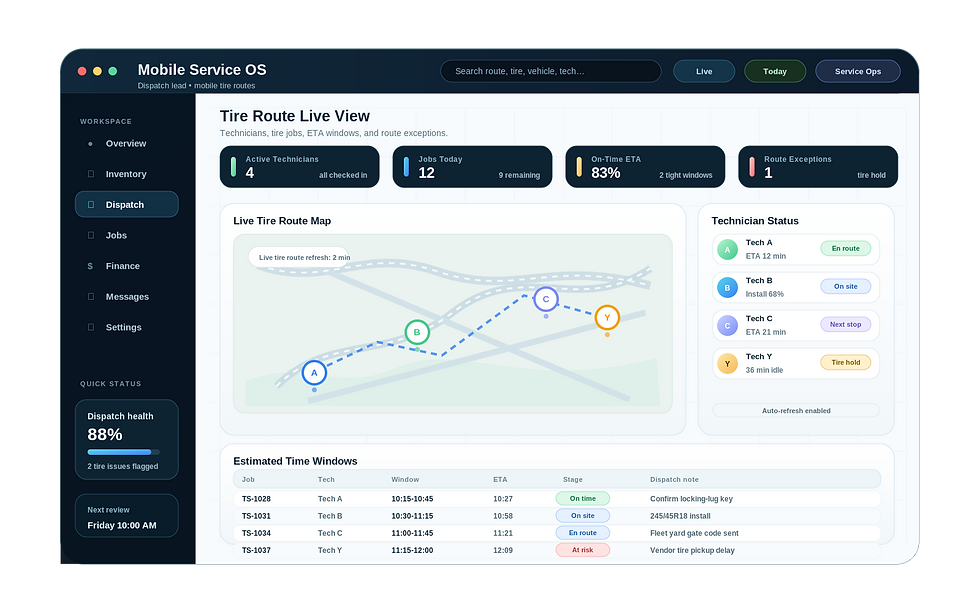
Route & ETA Live View
Track active trucks, job stages, ETA windows, route exceptions, and site notes so dispatch can adjust before a customer has to ask.
Tire Inventory Control View
Track tire sizes, SKUs, vendor orders, holds, low-stock items, substitutes, and route readiness from one practical inventory view.

Revenue & Expense Intelligence
Track scheduled installs, roadside calls, fleet work, tire COGS, labor, fuel, open invoices, and margin signals so owners can see where profit is leaking.


